
The 2026 Nationwide Rockfall Mitigation & Slope Stabilization Guide
Apex Rockfall Mitigation LLC | Professional Rockfall Mitigation | Limited Access Drilling | 24/7 Emergency ResponseWhy DOTs & Infrastructure Owners Choose Apex
24/7
Nationwide Emergency Response
10+
State DOT Relationships
Helicopter
Assisted Limited Access Drilling
Award
Winning Projects (APWA 2025)
Quick Navigation
What Is Rockfall Mitigation & When Is It Needed?
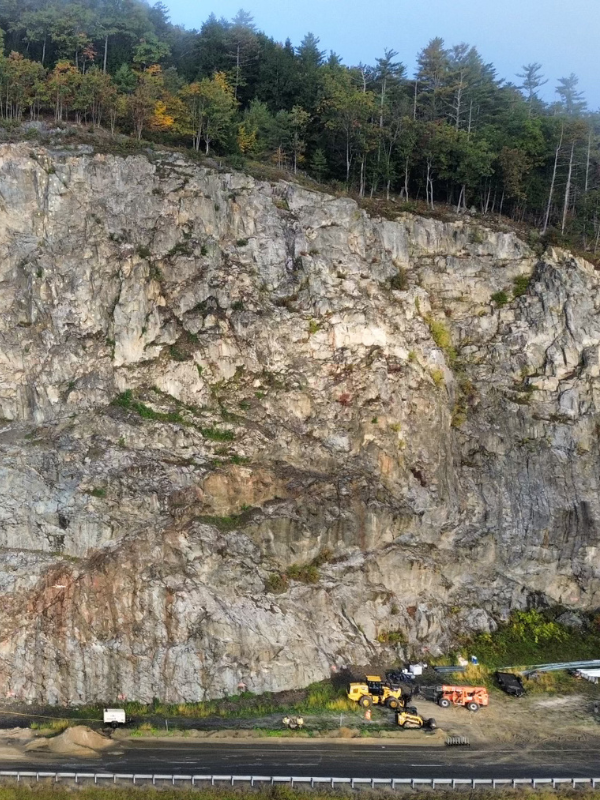
Rockfall mitigation involves installing protective systems—barriers, draped netting, pinned mesh, rock bolts, and stabilization measures—to prevent loose rocks and debris from falling onto roads, infrastructure, or populated areas. It's critical infrastructure protection for mountain highways, canyon corridors, mining operations, and any steep terrain where geological instability threatens public safety.
When Rockfall Mitigation Is Required
DOTs, municipalities, and infrastructure owners need rockfall mitigation when facing:
- Active Rockfall Events: Repeated incidents of rocks falling onto roadways, requiring emergency closures or constant maintenance crews
- Geological Instability: Fractured rock faces, weathered slopes, or seismic activity creating ongoing hazards
- Highway Corridor Protection: Mountain passes like Glenwood Canyon, Snoqualmie Pass, or Pacific Coast Highway where rockfall threatens traffic
- Post-Construction Stabilization: After blasting or excavation creates new rock faces requiring protection
- Mining Highwall Stabilization: Protecting workers and equipment from unstable pit walls
- Infrastructure Proximity: When critical utilities, buildings, or transportation assets sit below unstable slopes
- Regulatory Compliance: Federal Highway Administration (FHWA) or state DOT requirements for geohazard protection
The Cost of Inaction
Unmitigated rockfall leads to:
- Highway Closures: Emergency shutdowns costing DOTs $10,000-$50,000 per day in detour management and lost commerce
- Vehicle Damage & Injuries: Liability exposure from preventable incidents
- Escalating Maintenance: Reactive cleanup costs 3-5x more than proactive mitigation
- Public Safety Risk: Fatalities from rockfall events create regulatory scrutiny and litigation
Apex Rockfall Mitigation LLC has protected critical infrastructure across 12+ states, from California's Ortega Highway to Vermont's I-91 corridor, Colorado's Glenwood Canyon to Washington's Snoqualmie Pass. Our expertise in limited access drilling, helicopter-assisted installations, and 24/7 emergency response makes us the go-to contractor for DOTs facing complex geohazard challenges.
🚨 Emergency Rockfall Event?
Apex responds nationwide within 24 hours. Call (970) 314-7302 for immediate mobilization.
Rockfall Mitigation Services & Technical Capabilities
Apex provides comprehensive geohazard protection services for DOT, municipal, mining, and commercial clients nationwide. Our technical capabilities span passive protection systems (netting, barriers) to active stabilization (rock bolts, soil nails, shotcrete) and emergency response.
1. Rockfall Barriers & Attenuator Systems
What They Are: High-energy absorption fencing installed at the base of slopes to catch falling rocks before they reach roadways. Think of them as "catching nets" engineered to stop multi-ton boulders traveling 50+ mph.
When to Use: Ideal for highway corridors where slope access is difficult but debris accumulation threatens traffic. Common on Colorado's I-70, California's Pacific Coast Highway, and Washington's Cascade passes.
Technical Specs:
- Energy absorption ratings: 500 kJ to 8,500 kJ depending on slope height and rockfall velocity
- Heights: 8-20 feet typical, custom configurations available
- Materials: High-tensile steel cables, energy-absorbing brake elements, galvanized posts
- Lifespan: 30-50 years with minimal maintenance
Apex Advantage: We install Geobrugg, Maccaferri, and custom-engineered barrier systems with full load testing and FHWA compliance documentation. Our helicopter-assisted crews can install barriers in locations inaccessible to conventional equipment.
2. Draped Mesh Systems (Tecco, Geobrugg, Spider Netting)
What They Are: High-tensile steel mesh draped over rock faces and anchored at the top, allowing small debris to fall while containing larger rocks. Passive protection that works 24/7 without maintenance.
When to Use: Best for steep slopes with loose surface material but stable underlying rock. Prevents rockfall at the source rather than catching it below.
Technical Comparison:
| Mesh Type | Best For | Typical Cost |
|---|---|---|
| Tecco Mesh | High-energy rockfall zones, steep Highway cuts | $20-$35/sq ft |
| Geobrugg Spider Net | Moderate rockfall, budget-conscious projects | $15-$25/sq ft |
| Maccaferri Systems | Long-term durability, coastal environments | $25-$40/sq ft |
| Pinned Mesh | Unstable slopes needing active reinforcement | $30-$50/sq ft |
Recent Project Example: Apex installed 7,000 sq ft of pinned Tecco mesh for the City of El Cajon (Avocado Avenue project), earning the 2025 APWA Project of the Year award. The project required rope-access installation on a near-vertical slope above residential areas.
3. Limited Access Drilling & Rock Bolt Installation
What It Is: Specialty drilling operations in locations conventional rigs cannot reach—steep slopes, narrow highway shoulders, remote mountain terrain. We install rock bolts, soil nails, and tiebacks to actively stabilize rock masses.
When to Use: Essential for highwall stabilization in mining, post-blasting rock face reinforcement, or any slope where surface protection alone isn't enough. Common in Colorado DOT projects (Glenwood Canyon, US Highway 50) and Washington DOT mountain passes.
Technical Capabilities:
- Helicopter-Assisted Drilling: We transport specialty drill rigs via helicopter to sites with zero road access
- Rope-Access Teams: Crews rappel to drill locations on vertical or overhanging rock faces
- Spider Excavator Operations: Our Kaiser Spider Excavator reaches slopes too steep for conventional equipment (60+ degree angles)
- Grouted Rock Bolts: Fully grouted anchors providing 50-150 kip capacity for permanent stabilization
- Soil Nails & Tiebacks: Distributed anchor systems for large-scale slope reinforcement
Recent Project Example: Apex completed 106,000 linear feet of rock dowels for Chicago's McCook Reservoir project (2022-2023), stabilizing near-vertical walls at 34 locations within critical water infrastructure.
4. Slope Stabilization (Shotcrete, Soil Nails, Micropiles)
What It Is: Active reinforcement of unstable soil or rock slopes using grouted anchors, reinforced concrete, and drainage systems. Goes beyond rockfall protection to address underlying instability.
When to Use: Required when slopes are actively failing (landslides, slumps) or when long-term stability is critical for infrastructure protection. Common in CDOT and Caltrans projects along mountain highways.
Technical Services:
- Soil Nail Walls: Distributed anchor systems with shotcrete facing for permanent slope support
- Shotcrete Application: Pneumatically applied concrete including colored/carved finishes for aesthetic requirements
- Micropiles: Deep foundation elements for tower foundations, guy-wire anchors, or structural support in challenging terrain
- Drainage Systems: Horizontal drains to reduce pore pressure and prevent saturation-induced failures
5. Rock Scaling Services
What It Is: Manual or mechanical removal of loose rocks, vegetation, and debris from slopes to eliminate immediate hazards. First line of defense before installing permanent protection systems.
When to Use: Emergency response after rockfall events, routine maintenance on known hazard slopes, or preparatory work before mesh/barrier installation.
Service Levels:
- Light Scaling: Hand tools, pry bars, removing loose surface material ($10-$20/sq ft)
- Heavy Scaling: Jackhammers, hydraulic breakers, removing large unstable blocks ($20-$40/sq ft)
- Trim Blasting: Controlled explosives to remove overhangs or large unstable masses (custom pricing)
Recent Project Example: Apex provided 1,600 crew hours of rock scaling on Vermont's I-91 emergency project (2024), clearing unstable rock faces after a major rockfall event shut down the interstate.
6. Emergency Geohazard Response
What It Is: 24/7 nationwide mobilization for rockfall emergencies, highway closures, or infrastructure threats. Temporary protection, debris removal, boulder downsizing, and permanent solution implementation.
Response Services:
- Temporary Roadway Protection: Jersey barriers, catch fencing, traffic management while permanent solutions are designed
- Boulder Downsizing: Breaking large rocks into manageable pieces for removal
- Debris Cleanup: Off-hauling rockfall material to restore travel lanes
- Emergency Scaling: Immediate removal of imminently hazardous rocks
- Helicopter Operations: Material transport and personnel access in extreme conditions
Typical Response Timeline: Crews mobilize within 24 hours anywhere in the US. Equipment follows within 48-72 hours depending on location and specialized needs.
📞 Need Rockfall Mitigation Services?
Contact Apex at (970) 314-7302 to discuss your project requirements, timeline, and budget.
DOT Partnerships & Proven Project Track Record
Apex Rockfall Mitigation maintains active relationships with multiple state DOTs and federal agencies, having completed complex geohazard projects from Alaska to Vermont. Our proven track record with transportation departments, municipalities, and infrastructure owners demonstrates our capability to handle the most challenging rockfall mitigation and slope stabilization projects nationwide.
California Department of Transportation (Caltrans) Projects
Why California Is Challenging: California combines seismic activity, coastal erosion, wildfire-weakened slopes, and heavy rainfall-induced mudslides. Caltrans manages 50,000+ lane miles including Pacific Coast Highway, Ortega Highway, and Sierra Nevada mountain passes—all with significant rockfall risks.
Apex California Project Experience:
Caltrans Route 74 (Ortega Highway) Emergency Response – 2023
- Location: Orange County, connecting Lake Elsinore to San Juan Capistrano through Cleveland National Forest
- Challenge: Unstable slope threatening 450 feet of highway corridor after winter storms loosened rock faces
- Apex Solution: Emergency rock scaling, draped rockfall netting installation, and debris cleanup within 3-week deadline to reopen highway
- Scope: Manual scaling, high-tensile mesh systems, rope-access installation on steep terrain above active traffic lanes
- Result: Highway reopened on schedule with permanent protection system preventing future closures
Caltrans Route 18 (San Bernardino Mountains) – 2020
- Location: San Bernardino Mountains, popular route to Big Bear Lake and mountain communities
- Challenge: Install V140 Geobrugg debris flow barrier requiring precision drilling and load testing
- Apex Solution: Limited access drilling with forklift-mounted rig, anchor testing to 10% verification standard
- Result: Over 100 crew hours, full barrier installation protecting mountain highway from debris flows
Additional California Work:
- City of El Cajon (Avocado Avenue) – 2024: 7,000 sq ft pinned Tecco mesh system, awarded APWA Project of the Year 2025
- Telegraph Hill Phase II (San Francisco) – 2015: Urban rockfall mitigation including scaling, Tecco installation, spider netting, and shotcrete
- Rocklin Quarry Adventure Park – 2018: Rock scaling, boulder downsizing, and specialty anchor installation
Caltrans Advantage: Apex understands California's seismic design requirements, environmental permitting (CEQA), and Caltrans Standard Specifications. Our crews are experienced in working around active traffic, coastal access limitations, and fire-season restrictions common in California projects.
Colorado Department of Transportation (CDOT) Projects
Why Colorado Is Challenging: Colorado's mountain highways traverse some of North America's most geologically active terrain—Glenwood Canyon, I-70 mountain corridor, Independence Pass, and dozens of steep canyon routes. Freeze-thaw cycles, wildfire impacts, and extreme elevation changes create constant rockfall hazards.
Apex Colorado Project Experience:
US Highway 50 (Little Blue Creek Canyon, Cimarron) – 2022
- Location: Cimarron, western Colorado, critical east-west connector through Black Canyon region
- Owner: Federal Highway Administration (FHWA)
- Contractor: Arizona Drill & Blast (Apex subcontractor)
- Scope: Rock scaling, rock dowel installation, draped mesh systems on steep canyon walls
- Challenge: Remote location with limited access, working above active highway traffic
- Result: Permanent stabilization protecting critical mountain corridor
US Highway 24 (Colorado Mountain Corridor) – 2018
- Location: Central Colorado mountain highway connecting I-70 to southern Colorado
- Owner: Colorado Department of Transportation (CDOT)
- Scope: Mesh Anchor Special (MAS) systems, draped wire mesh, rock bolts, rock scaling, cable lashing, concrete barrier installation
- Challenge: Multi-phase project requiring coordination with CDOT traffic management and seasonal weather windows
- Result: Comprehensive protection system installed on schedule and budget
US Highway 34 (near Granby, Rocky Mountain National Park corridor) – 2016
- Owner: CDOT
- Contractor: Kiewit (Apex subcontractor)
- Scope: Mesh Anchor Special (MAS), draped wire mesh, rock bolts, rock scaling along North Fork Colorado River
- Challenge: Work adjacent to Trail Ridge Road access to Rocky Mountain National Park during tourist season
Telluride Debris Flow Barrier – 2019
- Location: Telluride, high-altitude resort community vulnerable to mountain debris flows
- Owner: Wild Horse Properties / Telluride Real Estate Brokers
- Scope: Installation of debris flow barrier system protecting luxury development
- Challenge: High-altitude installation (9,000+ feet), short seasonal work window, helicopter material transport
Additional Colorado Projects:
- Broadmoor Zip Tour (Colorado Springs) – 2016: Specialized tension anchors for guy-wire systems, rock scaling, rock bolts for resort adventure course
- Cave of the Winds Zipline Tour (Manitou Springs) – 2018: Specialized battered compression anchors for tower foundations, tension anchors in challenging rock formations
CDOT Advantage: Apex's Grand Junction headquarters positions us for rapid response to Colorado mountain highway emergencies. We understand CDOT specifications, high-altitude installation challenges, and seasonal work windows critical to Colorado projects.
Washington State Department of Transportation (WSDOT) Projects
Why Washington Is Challenging: Washington's Cascade Range creates steep mountain passes (Snoqualmie, Stevens, North Cascades Highway) with heavy snowfall, frequent freeze-thaw cycles, and seismic activity. WSDOT manages critical east-west corridors where rockfall can shut down interstate commerce.
Apex Washington Project Experience:
WSDOT West Tinkham Road Slope Stabilization (Snoqualmie Pass) – 2024
- Location: Snoqualmie Pass, I-90 corridor between Seattle and Spokane
- Owner: Washington State Department of Transportation (WSDOT)
- General Contractor: Granite Construction (Apex subcontractor)
- Scope: 350 crew hours of rock scaling, 1,350 linear feet of rock dowels, 850 linear feet of rock drains
- Challenge: Winter weather work windows, proximity to major interstate, steep terrain access
- Result: Permanent slope stabilization protecting critical mountain pass corridor
Lake Crescent (Olympic Peninsula) – 2017
- Location: Olympic National Park area, Highway 101 corridor
- Owner: Western Federal Lands Highway Department (WFLHD)
- Contractor: Strider Construction (Apex subcontractor)
- Scope: Rock scaling and rock bolting protecting scenic highway corridor
Boundary Dam (Northeast Washington) – 2018
- Owner: Seattle City Light
- Contractor: Clear Water Construction (Apex subcontractor)
- Engineer: Schnabel Engineering
- Scope: Bridge deck abutment stabilization including Spider Net installation, Del Tac systems, rock scaling, and cable lashing up to 10,000 PSI
- Challenge: Critical utility infrastructure protection requiring zero-downtime work sequencing
WSDOT Advantage: Apex's experience with Cascade Range geology, WSDOT specifications, and winter work conditions makes us a preferred contractor for Washington mountain pass projects. Our 24/7 emergency response capability is critical for I-90 and US 2 corridors where closures impact interstate commerce.
Oregon Department of Transportation (ODOT) Capabilities
Why Oregon Is Relevant: Oregon's Cascade Range, Columbia River Gorge, and coastal Highway 101 present similar geohazards to Washington and California. While Apex hasn't completed recent Oregon DOT projects (as of 2026), our experience with adjacent state geologies and WSDOT/Caltrans specifications positions us for ODOT opportunities.
Oregon Rockfall Contexts Where Apex Excels:
- I-84 Columbia River Gorge: Basalt cliffs prone to rockfall similar to our Washington State experience
- Highway 101 Coastal Corridor: Coastal erosion and slope instability paralleling our California Pacific Coast Highway work
- Cascade Highway Passes: Santiam, Willamette, McKenzie Pass routes with similar geology to Snoqualmie Pass projects
- Mount Hood Corridor (Highway 26): High-elevation volcanic terrain similar to Colorado mountain work
ODOT Readiness: Apex's certifications, equipment fleet (spider excavator, helicopter capabilities), and rope-access expertise translate directly to Oregon DOT requirements. Our Northern California office in Antioch provides regional staging for potential Oregon projects.
Additional State DOT Experience
Vermont Agency of Transportation (VTrans) – 2024
- Project: VTrans I-91 Emergency Response (Fairlee, VT)
- General Contractor: J.A. McDonald Inc. (Apex subcontractor)
- Scope: Emergency rockfall response, 1,600 crew hours of scaling, 2,500 linear feet of rock dowels
- Challenge: Emergency mobilization to Northeast, working in unfamiliar terrain within 24 hours
- Result: Interstate reopened rapidly with permanent stabilization, demonstrating Apex's nationwide response capability
Idaho Transportation Department (ITD) – 2020-Current
- Project: ITD Smith's Ferry to Round Valley (State Highway 55)
- Contractor: M.A. DeAtley Construction (Apex subcontractor)
- Scope: Massive ongoing project including 1,240 hours scaling, 150,000 LF rock anchor bars, 84,672 SY pinned steel mesh, 1,200 SY draped mesh, 155-unit avalanche umbrella system
- Award: Top Gold Construction Partnering Award for project excellence
New Mexico Department of Transportation (NMDOT) – 2022
- Project: NMDOT Route 434 (Angel Fire)
- Contractor: Kiewit Infrastructure (Apex subcontractor)
- Scope: 2,088 SY wire mesh, 31 PTI Class 1 tensioned rock bolts with alignment verification and water-tightness testing
Nevada Department of Transportation (NDOT) – 2019
- Project: NDOT I-80 Moor to Oasis Interchange (Wells, NV)
- Contractor: W.W. Clyde & Co. (Apex subcontractor)
- Scope: Post-blasting mesh installation, 60,000 sq ft Tecco drapery system, 27-20 cable anchors
Non-DOT Major Infrastructure Clients
Municipal & Utility Projects:
- Metropolitan Water Reclamation District of Greater Chicago (McCook Reservoir) – 2022-2023: 106,000 LF rock dowels, 5,064 SY anchored mesh, 4,480 SY manual scaling at 34 locations within critical water infrastructure
- Alaska Electric Light & Power (Salmon Creek Hydro, Juneau, AK) – 2025: Core drilling, sampling, and repair work on remote hydroelectric dam infrastructure
- Seattle City Light (Boundary Dam, WA) – 2018: Bridge abutment stabilization for critical power generation facility
Why Non-DOT Experience Matters: Municipal utilities and federal agencies have even stricter requirements than state DOTs—zero-downtime mandates, environmental permitting in sensitive areas, and critical infrastructure protection. Apex's success with these clients demonstrates our ability to handle the most demanding projects.
📋 Preparing an RFP for Rockfall Mitigation?
Contact Apex at (970) 314-7302 or info@apexrfm.com to discuss project requirements, timeline, and budget. We provide competitive proposals with detailed technical specifications and proven DOT references.
High-Risk Rockfall Regions & Geographic Expertise
Rockfall hazards vary dramatically by geology, climate, and terrain. Apex's nationwide project experience spans diverse geohazard environments—from California's seismic coastal ranges to Colorado's freeze-thaw mountain corridors, Washington's volcanic Cascades to Vermont's metamorphic Northeast terrain. Understanding regional risk factors is critical to designing effective, long-term rockfall mitigation systems.
Colorado Mountain Highway Corridors
Primary Risk Factors:
- Freeze-Thaw Cycles: Daily temperature swings from -10°F to 50°F crack rock faces, creating constant rockfall events
- Wildfire Impact: Post-fire loss of vegetation destabilizes slopes; rainfall on burned areas triggers debris flows
- High Elevation: 7,000-12,000 foot corridors experience extreme weather, short work seasons, challenging access
- Interstate Commerce: I-70, US 50, US 24 carry critical east-west traffic—closures cost millions daily
Critical Corridors:
Glenwood Canyon (I-70): Colorado's most notorious rockfall corridor. Twelve miles of interstate carved through sheer canyon walls between Glenwood Springs and Dotsero. Sedimentary layers (Leadville Limestone, Entrada Sandstone) prone to fracturing. CDOT maintains permanent rockfall crews and emergency response protocols. Apex's experience with similar CDOT projects (US 50, US 24, US 34) positions us for Glenwood Canyon emergency response or permanent mitigation work.
Western Slope Canyons (US 50, US 550): Cimarron Canyon, Black Canyon approaches, and Red Mountain Pass feature volcanic and sedimentary geology with frequent rockfall. Limited access, remote locations, and harsh winter conditions require specialty equipment (helicopter, spider excavator) that Apex maintains.
Front Range Corridors (Highway 34, Highway 36): Rocky Mountain National Park approaches and Front Range canyons serve tourist and commuter traffic. Projects require coordination with National Park Service, sensitive environmental permitting, and seasonal work windows.
Apex Colorado Advantage: Grand Junction headquarters provides 2-4 hour mobilization to any Colorado mountain highway. Our crews understand CDOT specifications, high-altitude installation challenges, and critical seasonal work windows (May-October). We maintain relationships with CDOT Region 3 (Western Slope) and can mobilize statewide within 24 hours for emergencies.
California Coastal & Mountain Highways
Primary Risk Factors:
- Seismic Activity: Earthquakes destabilize slopes; aftershocks trigger delayed failures months later
- Coastal Erosion: Wave action undercuts cliffs along Pacific Coast Highway, Highway 1 from Big Sur to Mendocino
- Atmospheric Rivers: Intense rainfall events (10-20 inches in 48 hours) saturate slopes, causing massive debris flows
- Wildfire-Rainfall Sequence: Post-fire slopes lose vegetation; first major rainfall triggers catastrophic mudslides
Critical Corridors:
Ortega Highway (Route 74): Connects I-15 (Lake Elsinore) to I-5 (San Juan Capistrano) through Cleveland National Forest. Sedimentary rock prone to failure after rainfall. Apex completed emergency stabilization (2023) with rock scaling and draped netting, demonstrating rapid-response capability for Caltrans.
Pacific Coast Highway (Highway 1): California's iconic coastal route from San Luis Obispo to Mendocino experiences chronic rockfall from sea cliff erosion, rainfall-induced failures, and seismic activity. Big Sur segment particularly vulnerable—regular closures cost local economies millions. Apex's coastal project experience (Telegraph Hill San Francisco, various Orange County sites) and helicopter capabilities position us for PCH emergency and permanent work.
San Bernardino Mountains (Routes 18, 38, 330): Mountain resort access roads to Big Bear Lake and mountain communities. Heavy winter use (skiing, recreation) makes closures unacceptable. Apex completed Route 18 debris flow barrier installation (2020) demonstrating capability for mountain corridor protection.
Sierra Nevada Corridors (I-80, Highway 50, Highway 88): Tahoe access routes experience extreme rockfall from freeze-thaw cycles, seismic activity, and post-blasting instability. While Apex hasn't completed recent Sierra projects, our Nevada I-80 work (2019) and California coastal experience translate directly to Sierra geology.
Apex California Advantage: Two California offices (Antioch for Northern California, Corona for Southern California) enable rapid statewide response. Our crews understand Caltrans specifications, CEQA environmental permitting, and seismic design requirements specific to California. We maintain Caltrans contractor relationships and can respond within 24 hours for emergency closures.
Washington Cascade Mountain Passes
Primary Risk Factors:
- Heavy Snowfall: Snoqualmie Pass averages 400+ inches annually; snow load stresses rock faces, spring melt triggers failures
- Volcanic Geology: Cascade Range volcanics (andesite, basalt) create blocky, jointed rock prone to wedge failures
- Seismic Activity: Proximity to Cascadia Subduction Zone creates earthquake risk
- Short Work Season: May-October window for non-emergency work; winter access extremely challenging
Critical Corridors:
Snoqualmie Pass (I-90): Washington's primary east-west corridor between Seattle and Spokane. Year-round traffic requires rapid emergency response to rockfall events. Apex completed WSDOT West Tinkham Road project (2024) with 350 crew hours scaling and 1,350 LF rock dowels, proving capability for I-90 corridor work.
Stevens Pass (Highway 2): Alternate Seattle-Spokane route with steeper grades and more severe rockfall hazards than I-90. Frequent winter avalanches compound geohazard management challenges.
North Cascades Highway (Highway 20): Closed winters, extreme terrain, remote access. Requires helicopter-assisted operations and specialty equipment—Apex's core capabilities.
Mount Rainier Corridors (Highways 410, 123, 706): National park approaches with strict environmental requirements, seasonal closures, and volcanic geology similar to our Washington State experience.
Apex Washington Advantage: Our Snoqualmie Pass project experience demonstrates understanding of WSDOT specifications, Cascade geology, and winter-season challenges. We can mobilize from Colorado or California offices within 24-48 hours for Washington emergencies, with equipment following based on project scale.
Oregon Cascade & Coastal Highways
Why Oregon Is on Apex's Radar: While we haven't completed recent Oregon DOT projects, our adjacent-state experience (Washington Cascades, California coast) and technical capabilities translate directly to Oregon geohazards.
Oregon Rockfall Contexts Similar to Apex Expertise:
Columbia River Gorge (I-84): Basalt cliffs prone to rockfall, similar to our Washington State Lake Crescent and Boundary Dam projects. Historic Highway 101 reopening after 2017 Eagle Creek Fire requires ongoing geohazard mitigation—perfect fit for Apex's post-fire slope experience.
Pacific Coast Highway 101: Oregon coastal segment from Astoria to Brookings mirrors California's Pacific Coast Highway challenges—coastal erosion, rainfall-induced failures, remote access. Our California coastal experience and helicopter capabilities position us for Highway 101 work.
Cascade Mountain Passes (Santiam, Willamette, McKenzie): Similar geology and climate to Washington's Snoqualmie Pass. Our WSDOT experience translates to ODOT mountain pass projects.
Mount Hood Corridor (Highway 26): High-volume route to ski resorts and recreation areas. Volcanic geology and seasonal rockfall similar to our Cascade Range experience.
Apex Oregon Readiness: Northern California office in Antioch provides <4 hour mobilization to southern Oregon, <8 hours to Portland metro. Our certifications, equipment, and Cascade/coastal expertise make us a strong candidate for ODOT projects when opportunities arise.
Additional High-Risk Geographies
Idaho Mountain Highways: Our ongoing Smith's Ferry project (Highway 55, 2020-current) demonstrates capability for Idaho's steep, remote mountain corridors. 150,000 LF of rock anchors and 84,672 SY of pinned mesh represent one of the largest rockfall mitigation projects in the Northwest.
Nevada Desert Highways: I-80 corridor through Pequop Summit experiences rockfall despite lower elevation. Our 2019 NDOT project (60,000 sq ft Tecco mesh) shows adaptability to desert geologies.
Vermont & Northeast Mountain Corridors: Our 2024 VTrans I-91 emergency response (1,600 crew hours scaling, 2,500 LF rock dowels) proves nationwide mobilization capability even in unfamiliar terrain. Vermont's metamorphic geology differs from Western states, but our technical expertise and equipment fleet adapt to any rock type.
Alaska & Remote Infrastructure: Salmon Creek Hydro project (2025) in Juneau demonstrates capability for extreme-remote locations requiring helicopter access, cold-weather operations, and sensitive environmental compliance. Alaska utility and transportation infrastructure often requires rockfall mitigation—Apex can mobilize nationwide including Alaska.
🗺️ Need Rockfall Mitigation in Your Region?
Apex works nationwide from Alaska to Vermont, California to Colorado. Call (970) 314-7302 to discuss your location-specific geohazard challenges.
24/7 Emergency Rockfall Response Nationwide
Rockfall emergencies don't wait for business hours. Highway closures cost DOTs and local economies tens of thousands of dollars per hour. Critical infrastructure damage threatens public safety and regulatory compliance. Apex Rockfall Mitigation maintains 24/7 emergency response capabilities nationwide, mobilizing specialized crews and equipment within 24 hours to any location in the continental United States—and to Alaska or remote territories within 48-72 hours.
What Qualifies as a Rockfall Emergency?
DOT & Infrastructure Emergencies:
- Highway Closure Events: Rockfall blocking travel lanes requiring immediate debris removal and temporary protection
- Imminent Failure Conditions: Visible cracks, movement, or destabilization threatening infrastructure within hours or days
- Post-Seismic Damage: Earthquake-loosened rock requiring emergency scaling before reopening highways
- Storm-Triggered Failures: Heavy rainfall or snowmelt causing slope failures or debris flows
- Post-Wildfire Instability: First major rainfall after fire season triggering mudslides or rockfall in burned areas
- Utility Infrastructure Threats: Rockfall threatening power lines, pipelines, water treatment facilities, or dams
Apex Emergency Response Timeline
Hour 0-2: Initial Contact & Assessment
- 24/7 emergency hotline: (970) 314-7302
- Project manager assigned within 30 minutes
- Initial assessment via photos/video from client
- Preliminary scope, crew size, and equipment needs determined
- Mobilization authorization and cost estimate provided
Hour 2-6: Crew Mobilization
- Emergency crews assembled from nearest regional office (Grand Junction CO, Antioch CA, Corona CA)
- Safety equipment, hand tools, and light equipment loaded
- Travel logistics arranged (driving for <500 miles, flying for 500+ miles)
- Coordination with DOT traffic control, permitting, and site access
Hour 6-24: On-Site Response
- Crews arrive on-site for most continental US locations within 12-24 hours
- Geotechnical assessment, hazard mapping, and safety planning completed
- Temporary protection measures installed (jersey barriers, catch fencing, traffic control)
- Emergency scaling begins to remove imminently hazardous material
- Boulder downsizing and debris removal to reopen travel lanes
Hour 24-72: Heavy Equipment Arrival
- Spider excavator, drill rigs, and specialty equipment transported to site
- Helicopter operations arranged if required for remote access
- Permanent solution design and engineering analysis completed
- Transition from emergency response to permanent mitigation installation
Emergency Response Capabilities
Temporary Roadway Protection: Rapid installation of jersey barriers, K-rail systems, and temporary catch fencing to protect travel lanes while permanent solutions are designed. Coordination with DOT traffic control for lane closures, detours, and flagging operations.
Emergency Rock Scaling: Rope-access crews rappel to remove loose rocks, unstable blocks, and immediate hazards. Light scaling with hand tools or heavy scaling with jackhammers and hydraulic breakers depending on conditions. Priority: reopen highways safely and quickly.
Boulder Downsizing: Breaking large rocks (5-50+ tons) into manageable pieces for removal using trim blasting, hydraulic breakers, or expansive grout techniques. Critical when boulders are too large to move intact and block critical infrastructure.
Debris Removal & Off-Hauling: Loading and transporting rockfall material off-site to restore travel lanes. Coordination with DOT-approved disposal sites and environmental compliance for debris management.
Helicopter Operations: Rapid deployment of crews and equipment to remote locations with no road access. Material transport, personnel insertion, and equipment staging via long-line or internal cargo operations. Apex maintains relationships with helicopter contractors nationwide for emergency mobilization.
Case Study: Vermont I-91 Emergency Response (2024)
The Emergency: Major rockfall event shut down I-91 in Fairlee, VT—a critical North-South corridor between Boston and Montreal. Thousands of cubic yards of rock blocked both travel lanes with additional unstable material threatening continued closure.
The Challenge: Vermont is 2,000+ miles from Apex's Grand Junction headquarters. Unfamiliar geology (metamorphic rock vs. Western sedimentary/volcanic). Winter conditions complicating access and operations.
Apex Response:
- Mobilization: Crews departed Colorado within 12 hours, arrived on-site within 24 hours
- Scope: 1,600 crew hours of emergency scaling, 2,500 linear feet of rock dowels for permanent stabilization
- Coordination: Worked under J.A. McDonald Inc. (general contractor) with VTrans oversight
- Result: Interstate reopened within VTrans timeline, permanent stabilization preventing future failures
Key Takeaway: This project demonstrated Apex's true nationwide capability—mobilizing across the country to unfamiliar terrain, adapting to new geologies, and delivering results under emergency conditions. If we can respond to Vermont from Colorado within 24 hours, we can respond anywhere in the US.
Emergency Response Pricing
Mobilization Fees: $5,000-$25,000 depending on distance and urgency. Covers crew travel, equipment transport, and emergency logistics. Mobilization often negotiable or waived for established DOT clients.
Hourly Emergency Rates: Typically 1.5x-2.0x standard rates due to 24/7 availability, rapid response requirements, and premium insurance/safety protocols. Hourly crew rates $150-$300 per person depending on skill level and conditions.
Equipment Rates: Spider excavator, drill rigs, and specialty equipment billed at prevailing rates plus transport. Helicopter operations billed at actual cost (typically $1,500-$3,000/hour flight time).
Cost vs. Closure: Emergency mitigation costs are almost always lower than extended highway closure costs. A single day of I-70 Glenwood Canyon closure costs CDOT $10,000-$50,000 in detour management, lost commerce, and emergency operations. Apex emergency response typically pays for itself within 24-48 hours of highway reopening.
🚨 EMERGENCY ROCKFALL HOTLINE
Highway closure? Imminent slope failure? Critical infrastructure at risk?
Call (970) 314-7302 NOW – 24/7 emergency response nationwide
Specialty Equipment & Limited Access Capabilities
Rockfall mitigation often occurs in locations where conventional construction equipment cannot operate—steep slopes, narrow highway shoulders, remote mountain terrain, or environmentally sensitive areas. Apex's specialty equipment fleet and rope-access expertise enable us to complete projects other contractors cannot bid. This is our competitive advantage: we work where others can't.
Kaiser Spider Excavator
What It Is: A tracked excavator with independently articulating legs allowing operation on slopes up to 60+ degrees—terrain where conventional excavators would tip over. Think of it as a "walking excavator" that maintains stability on near-vertical hillsides.
When We Use It:
- Steep highway cuts requiring drilling, scaling, or material placement
- Mining highwall stabilization where conventional access roads aren't feasible
- Remote slope work where building access roads would cost more than the mitigation project itself
- Environmentally sensitive areas where minimizing ground disturbance is critical
Capabilities: Mounting platform for drill rigs, hydraulic breakers, material buckets, or rock scaling attachments. Operates in terrain inaccessible to standard excavators, bulldozers, or cranes. Reduces project costs by eliminating temporary road construction.
Projects Where Spider Excavator Was Critical: El Cajon Avocado Avenue (2024), various California Caltrans sites, Colorado mining operations, Washington steep slope work.
Helicopter-Assisted Operations
What It Involves: Using helicopters to transport crews, equipment, and materials to rockfall sites with zero road access. Includes long-line cargo operations (equipment suspended below helicopter) and internal cargo transport (materials inside helicopter).
When We Use Helicopters:
- Remote mountain slopes with no vehicle access (Alaska, Idaho backcountry, Colorado high-altitude sites)
- Emergency response where time is critical and ground access would take days to establish
- Projects where building temporary access roads would cost more than helicopter operations
- Sensitive environments where ground disturbance must be minimized (national parks, wilderness areas)
Equipment We Transport Via Helicopter: Drill rigs (up to 2,000 lbs), concrete mixers, rock bolts and anchors, mesh rolls, crew personnel and safety equipment, fuel and supplies for multi-day remote operations.
Safety & Coordination: Apex maintains relationships with certified helicopter contractors nationwide. Our project managers are experienced in helicopter operations planning, load calculations, and flight safety protocols. All crew members receive helicopter safety training before participating in aerial operations.
Recent Helicopter Projects: Telluride Debris Flow Barrier (2019) required helicopter material transport to 9,000+ foot elevation. Alaska Salmon Creek Hydro (2025) used helicopter access for remote dam inspection and repair work.
Rope Access & Vertical Work Expertise
What It Is: Highly trained technicians using industrial rope systems to access vertical or overhanging rock faces for drilling, scaling, mesh installation, or inspection work. Similar to mountain climbing, but with industrial equipment and construction tasks.
When Rope Access Is Required:
- Rock faces too steep for spider excavator (70-90+ degree slopes, overhangs)
- Locations above active highway traffic where ground equipment would require full road closure
- Tight spaces where equipment cannot fit (narrow highway shoulders, urban settings)
- Quick-response scenarios where mobilizing heavy equipment would take too long
Rope Access Capabilities: Rock scaling with hand tools, drill rig operation while suspended on rope, mesh installation and anchor placement, rock bolt installation, inspection and geotechnical assessment. All work performed with OSHA-compliant fall protection and rescue systems.
Training & Certification: Apex rope-access technicians receive specialized training in industrial rope systems, rescue operations, and vertical construction techniques. Many team members have backgrounds in professional guiding, search-and-rescue, or military special operations—bringing high-consequence decision-making skills to rockfall mitigation work.
Recent Rope Access Projects: El Cajon Avocado Avenue (2024) required rope-access installation of 7,000 sq ft pinned mesh on near-vertical slope. Telegraph Hill San Francisco (2015) used rope access for urban rockfall mitigation above residential areas. Multiple Caltrans and CDOT projects employ rope access as primary installation method.
Limited Access Drilling Rigs
What They Are: Compact, specialized drill rigs designed for steep slopes, narrow access, and locations where full-size rigs cannot operate. Include forklift-mounted drills, track-mounted units, and portable systems.
Drilling Capabilities:
- Rock bolt installation: 1-6 inch diameter holes, 10-40 feet deep, grouted or mechanical anchors
- Soil nail drilling: Distributed anchor systems for slope reinforcement
- Drainage holes: Horizontal drains to reduce pore pressure in saturated slopes
- Core sampling: Geotechnical investigation and rock quality assessment
- Micropile installation: Deep foundation elements for structural support
Recent Drilling Projects: McCook Reservoir Chicago (2022-2023) installed 106,000 linear feet of rock dowels. Idaho Smith's Ferry (ongoing) includes 150,000 linear feet of rock anchor bars—one of the largest rockfall drilling projects in the Northwest. Washington Snoqualmie Pass (2024) installed 1,350 LF rock dowels and 850 LF drainage systems.
🔧 Need Specialty Equipment Access?
Apex maintains spider excavators, helicopter relationships, rope-access crews, and limited-access drill rigs nationwide. Call (970) 314-7302 to discuss your site access challenges.
DOT & Municipal Procurement Guide for Rockfall Mitigation
Procuring rockfall mitigation services differs from standard highway construction. Projects often involve emergency response, specialty contractors, geotechnical uncertainty, and environmental sensitivities. This guide helps DOT project managers, municipal engineers, and infrastructure owners navigate the rockfall mitigation contractor selection process—from initial RFP development through project completion.
When to Use Design-Bid-Build vs. Design-Build Delivery
Design-Bid-Build (Traditional): DOT hires geotechnical engineer to assess site and design mitigation system. Then DOT issues RFP for construction based on engineer's design. Contractors bid on installing the designed system.
Best For:
- Well-understood rockfall hazards with straightforward solutions
- Projects where DOT has strong in-house geotechnical expertise
- Publicly funded projects requiring competitive bidding
- Non-emergency scenarios with adequate planning time
Design-Build (Progressive): DOT hires contractor who provides both geotechnical assessment and mitigation installation. Contractor proposes solution and pricing as integrated package.
Best For:
- Emergency response where speed matters more than competitive bidding
- Complex sites where contractor expertise will improve design
- Projects requiring specialty equipment or techniques (helicopter, spider excavator)
- Situations where contractor's field experience will reduce costs vs. theoretical design
Apex Recommendation: We work successfully under both delivery methods. For emergency response or highly technical projects (limited access drilling, helicopter operations), design-build often reduces costs and timeline by allowing contractor input during design phase. For standard highway protection projects, design-bid-build works well.
What to Include in Rockfall Mitigation RFPs
Minimum RFP Requirements:
1. Site Information:
- Location, highway corridor, milepost markers
- Site access details (road access, helicopter required, permitting needs)
- Photos and geotechnical reports if available
- Slope height, angle, geology (sedimentary, volcanic, metamorphic)
- History of rockfall events (frequency, size, consequences)
2. Project Scope (If Design-Bid-Build):
- Specific mitigation system required (barrier type, mesh specifications, anchor details)
- Quantities (linear feet of barrier, square feet of mesh, number of rock bolts)
- Testing requirements (anchor pull tests, mesh energy ratings)
- Environmental compliance (permits, sensitive species, work windows)
3. Contractor Qualifications (Especially for Design-Build):
- Experience with similar projects (DOT references required)
- Specialty capabilities (helicopter, limited access drilling, rope access)
- Equipment availability (spider excavator, drill rigs)
- Safety record and insurance coverage
- Professional engineer on staff or under contract for design-build
4. Timeline & Schedule:
- Project start date (emergency = immediate, planned = flexible)
- Completion deadline (highway reopening date, seasonal constraints)
- Work hour restrictions (night work, weekend work, traffic control windows)
- Weather contingencies (winter work, spring runoff, wildfire season)
5. Budget & Payment Terms:
- Estimated project budget or budget range
- Payment structure (lump sum, unit price, time and materials)
- Mobilization payment terms (critical for emergency projects)
- Retainage policies and final payment schedule
Evaluating Rockfall Contractor Proposals
Key Selection Criteria:
1. Relevant Experience (Most Important): Has contractor completed projects similar in scale, complexity, and geology? Can they provide DOT references? Have they worked in your state or region before (understanding local geology and DOT specifications)?
Apex Advantage: Caltrans, CDOT, WSDOT, IDOT, VTrans, NMDOT, and NDOT references available. Projects range from small emergency scaling to 150,000 LF drilling operations. Coast-to-coast experience (Alaska to Vermont, California to Colorado).
2. Technical Capabilities (Equipment & Expertise): Does contractor own specialty equipment or subcontract it? Can they access your site (helicopter, spider excavator, rope access)? Do they have in-house drilling capabilities or rely on subcontractors?
Apex Advantage: Spider excavator owned in-house. Helicopter contractor relationships nationwide. Rope-access teams trained and certified. Limited-access drill rigs owned and operated by Apex crews.
3. Safety Record: What is contractor's OSHA recordable incident rate? Do they have site-specific safety plans? Is safety officer assigned to project?
Apex Advantage: Comprehensive safety program with site-specific plans. OSHA-compliant fall protection and rope rescue systems. Regular safety training and equipment inspections.
4. Cost (But Not Lowest Bid): Is pricing realistic for scope and conditions? Does contractor understand site challenges? Are there hidden costs or unrealistic assumptions?
Warning Signs: Bids significantly lower than competition often indicate contractor doesn't understand site complexity, will cut corners on safety/quality, or will submit change orders throughout project. Choose qualified contractor with realistic pricing over lowest bidder with unrealistic assumptions.
5. Schedule Realism: Can contractor mobilize within timeline? Do they understand seasonal constraints? Is proposed schedule achievable given weather, permitting, and access challenges?
Typical Project Timelines
| Project Type | Typical Duration | Key Timeline Factors |
|---|---|---|
| Emergency Response | 24 hours mobilization 1-2 weeks completion |
Immediate start, 24/7 operations, highway reopening priority |
| Rock Scaling | 1-4 weeks | Slope size, access method, traffic control windows |
| Draped Mesh System | 2-6 weeks | Mesh area, anchor installation, rope access vs equipment |
| Rockfall Barrier | 4-8 weeks | Linear footage, foundation drilling, testing requirements |
| Large-Scale Stabilization | 2-6 months | Drilling quantity, seasonal work windows, permits |
📋 Need Help Preparing an RFP?
Apex can assist DOT project managers with scope development, budget estimates, and technical specifications for rockfall mitigation RFPs. Call (970) 314-7302 or email info@apexrfm.com for consultation.
Rockfall Mitigation Cost & Budget Planning
Rockfall mitigation costs vary dramatically based on site access, geology, project scale, and urgency. Understanding cost drivers helps DOTs and infrastructure owners budget appropriately and evaluate contractor proposals. These 2026 estimates reflect installed costs for typical projects—actual pricing depends on site-specific conditions.
Cost Ranges by Service (2026 Estimates)
| Service | Cost Range (Installed) | What Affects Price |
|---|---|---|
| Draped Mesh (Tecco/Geobrugg) | $20-$50 per sq ft | Mesh type, slope height, anchor quantity, access method |
| Pinned Mesh Systems | $30-$50 per sq ft | Anchor spacing, drilling difficulty, rope access requirements |
| Rockfall Barriers | $100-$300 per linear ft | Energy rating, height, foundation conditions, access |
| Rock Bolts/Dowels | $50-$150 per hole | Hole depth, rock hardness, grouting requirements, testing |
| Rock Scaling (Light) | $10-$20 per sq ft | Loose material volume, access method, disposal distance |
| Rock Scaling (Heavy) | $20-$40 per sq ft | Block size, mechanical tools required, safety complexity |
| Slope Stabilization | $30-$80 per sq ft | Soil nails, shotcrete, drainage, structural requirements |
| Emergency Response | $5K-$25K mobilization + hourly rates |
Distance, urgency, crew size, equipment needs |
What Drives Rockfall Mitigation Costs?
1. Site Access: The single biggest cost driver. Helicopter-accessible-only sites can cost 2-3x more than sites with road access. Spider excavator access (steep but reachable) adds 30-50% vs. standard equipment access.
2. Project Scale: Larger projects benefit from economies of scale. A 10,000 sq ft mesh installation costs less per square foot than a 1,000 sq ft installation due to mobilization and setup efficiencies.
3. Rock Hardness & Geology: Drilling in granite costs more than sedimentary rock (slower drill rates, more bit wear). Fractured rock requires more anchors than intact rock. Weathered slopes need more preparation than fresh rock faces.
4. Environmental & Permitting: Projects in national parks, wilderness areas, or near sensitive species require specialized permitting, seasonal work windows, and environmental compliance—adding 15-30% to costs.
5. Traffic Control: Highway projects requiring lane closures, detours, or night work add significant costs. Full freeway closures cost $5,000-$20,000 per day in traffic control alone.
6. Testing & Engineering: Anchor pull testing (10% verification standard) adds costs but ensures quality. Professional engineering for design-build projects typically adds 8-12% to construction costs.
Sample Project Budget Breakdowns
Small Highway Rockfall Project ($50K-$150K):
- 500 sq ft draped mesh: $10,000-$25,000
- Light rock scaling: $5,000-$10,000
- 25 rock bolts (15 ft depth): $1,250-$3,750
- Mobilization & setup: $5,000-$10,000
- Traffic control: $8,000-$15,000
- Engineering & testing: $5,000-$10,000
- Total: $34,250-$73,750
Medium Highway Protection ($250K-$500K):
- 5,000 sq ft pinned mesh system: $150,000-$250,000
- Heavy rock scaling: $50,000-$100,000
- 150 rock dowels: $7,500-$22,500
- 300 LF rockfall barrier: $30,000-$90,000
- Mobilization & equipment: $15,000-$30,000
- Traffic control & permits: $25,000-$50,000
- Total: $277,500-$542,500
Large Multi-Phase Stabilization ($1M-$5M+):
- Example: Idaho Smith's Ferry project (150,000 LF rock anchors, 84,672 SY mesh)
- Multi-year projects with ongoing work
- Helicopter access, remote logistics, seasonal constraints
- Comprehensive drilling, mesh, drainage, and avalanche protection systems
💰 Need a Project Estimate?
Contact Apex at (970) 314-7302 or info@apexrfm.com with site photos, location details, and project timeline. We provide competitive proposals typically within 3-5 business days for standard projects, faster for emergencies.
Frequently Asked Questions About Rockfall Mitigation
What is rockfall mitigation and when is it needed?
Rockfall mitigation involves installing protective systems—barriers, draped netting, pinned mesh, rock bolts, and slope stabilization—to prevent loose rocks from falling onto roads, mining sites, or infrastructure. It's needed when geological instability threatens public safety, infrastructure function, or causes repeated highway closures. Common scenarios include mountain highway corridors (Glenwood Canyon, Pacific Coast Highway, Snoqualmie Pass), post-construction slope protection, mining highwall stabilization, and emergency response after rockfall events. If you're managing steep slopes in geologically active areas like Western Colorado, California coastal routes, or Cascade mountain passes, you likely need rockfall mitigation to protect against debris flows and falling rock hazards.
How does limited access drilling work for slope stabilization?
Limited access drilling uses specialty equipment—compact track-mounted rigs, forklift-mounted drills, or helicopter-transported systems—to install rock bolts, soil nails, or anchors in locations conventional drill rigs cannot reach. This includes steep highway cuts, narrow shoulders, remote mountain slopes, or sites with no vehicle access. Apex's limited access capabilities include spider excavator-mounted drills (operating on 60+ degree slopes), helicopter-assisted equipment transport, and rope-access drilling where technicians rappel to drill locations. Our experienced crews handle everything from core drilling to anchor installation, grouting, and load testing. Recent projects include Washington's Snoqualmie Pass (1,350 LF rock dowels), Chicago's McCook Reservoir (106,000 LF dowels), and ongoing Idaho Smith's Ferry work (150,000 LF rock anchors). If your project site is steep, remote, or has limited access, Apex can deploy nationwide within 24-48 hours with appropriate equipment.
What are the differences between draped netting and pinned mesh for rockfall protection?
Draped netting (like Tecco, Geobrugg, or spider mesh) is a passive system installed by anchoring high-tensile steel mesh at the top of a slope and allowing it to drape freely over the rock face. It catches falling rocks while letting small debris pass through, requiring minimal maintenance and costing $20-$35 per square foot installed. Pinned mesh is actively secured to the rock face with anchors distributed across the slope every 3-6 feet, providing higher energy absorption and preventing the rock face itself from moving. Pinned systems cost $30-$50 per square foot but work better on actively unstable slopes where draped mesh alone wouldn't suffice. Both prevent landslides and debris flows but serve different geological conditions. Apex specializes in both systems for Caltrans, CDOT, and other DOT clients. We can assess your specific site and recommend the most cost-effective solution—contact us for a free site evaluation and technical recommendation at (970) 314-7302.
How much does rock scaling cost and what's the process?
Rock scaling typically costs $10-$20 per square foot for light scaling (removing loose surface material with hand tools) or $20-$40 per square foot for heavy scaling (removing large unstable blocks with jackhammers, hydraulic breakers, or trim blasting). The process involves rope-access technicians rappelling down the slope, systematically removing loose rocks, vegetation, and unstable material using pry bars, hammers, and power tools. All debris is either caught in nets or carefully lowered to avoid damaging infrastructure below. Projects are planned around traffic control windows, weather conditions, and site-specific safety requirements. Apex's rope-access teams ensure safety with OSHA-compliant fall protection, rescue systems, and experienced supervision. We've completed scaling projects from Vermont's I-91 (1,600 crew hours) to California's Ortega Highway (450 feet of highway corridor) to Colorado mountain passes. Rock scaling is often the first step before installing permanent protection systems, and it's critical for emergency response when immediate hazards must be removed to reopen highways. Get a custom estimate at (970) 314-7302—most quotes provided within 24-48 hours.
Can Apex handle emergency geohazard mitigation nationwide?
Yes. Apex provides 24/7 emergency rockfall and geohazard response anywhere in the continental United States, with mobilization to Alaska and remote territories within 48-72 hours. Our emergency services include temporary roadway protection (jersey barriers, catch fencing), emergency rock scaling, boulder downsizing, trim blasting, debris cleanup, and rapid permanent solution installation. Recent nationwide emergency responses include Vermont's I-91 rockfall (mobilized from Colorado within 24 hours, completed 1,600 crew hours scaling and 2,500 LF rock dowels), California's Ortega Highway emergency closure, and multiple CDOT, WSDOT, and Caltrans urgent projects. We maintain regional offices in Grand Junction CO, Antioch CA, and Corona CA for rapid deployment, plus equipment staging and helicopter contractor relationships nationwide. Typical response: crews on-site within 12-24 hours for most US locations, equipment following within 48-72 hours. If you're a DOT, municipality, or infrastructure owner facing a rockfall emergency, call our 24/7 hotline immediately: (970) 314-7302. We respond within hours, not days.
What state DOTs has Apex worked with?
Apex maintains active relationships with multiple state departments of transportation, having completed projects for Caltrans (California), CDOT (Colorado), WSDOT (Washington), IDOT (Idaho), VTrans (Vermont), NMDOT (New Mexico), and NDOT (Nevada). We've also worked with Federal Highway Administration (FHWA), Western Federal Lands Highway Department, and numerous municipal agencies. Our DOT experience spans emergency response (Vermont I-91, California Ortega Highway), large-scale stabilization (Idaho Smith's Ferry ongoing project with 150,000 LF anchors), urban infrastructure (Chicago McCook Reservoir), and specialty installations (WSDOT Snoqualmie Pass, CDOT mountain corridors). Each DOT has unique specifications, permitting requirements, and geological challenges—Apex understands these differences and adapts accordingly. If you're preparing an RFP or need DOT references for your state, contact us at info@apexrfm.com or (970) 314-7302. We provide detailed reference lists with project manager contacts for verification.
Do you provide helicopter-assisted rockfall mitigation services?
Yes. Apex coordinates helicopter operations for rockfall projects requiring remote access, rapid mobilization, or sites where building temporary roads would exceed project budgets. Our helicopter capabilities include long-line cargo operations (equipment suspended below aircraft), internal cargo transport, crew insertion to remote slopes, and material delivery to high-elevation sites. Recent helicopter projects include Telluride's debris flow barrier installation at 9,000+ feet elevation, Alaska Salmon Creek Hydro dam work, and various Colorado and Idaho remote mountain sites. We maintain relationships with certified helicopter contractors nationwide and have project managers experienced in flight planning, load calculations, and aerial operations safety. Helicopter costs typically run $1,500-$3,000 per flight hour, but this is often cheaper than building multi-mile access roads for short-duration projects. If your site requires helicopter access, Apex can provide feasibility assessment and cost comparison versus ground access alternatives. Contact us at (970) 314-7302 to discuss your project's access challenges.
What is a spider excavator and when is it used for rockfall work?
A spider excavator is a specialty excavator with independently articulating legs that allow operation on slopes up to 60+ degrees—terrain where conventional excavators cannot work safely. Apex uses the Kaiser Spider Excavator for steep highway cuts, mining highwall stabilization, and remote slope work where access road construction isn't feasible. The spider excavator serves as a stable mounting platform for drill rigs, hydraulic rock breakers, material buckets, and scaling attachments, dramatically expanding our capabilities on steep terrain. Spider excavator operations cost 30-50% more than conventional equipment due to specialty nature, but eliminate the need for expensive temporary access roads or helicopter transport for many projects. Recent spider excavator projects include California's El Cajon Avocado Avenue (APWA Project of the Year 2025), various Caltrans steep slope installations, and Colorado mining operations. If your project involves steep slopes that seem "too dangerous" or "impossible" for standard equipment, spider excavator access is likely the solution. Contact Apex at (970) 314-7302 to discuss spider excavator feasibility for your site.
How long does a typical rockfall mitigation project take?
Project timelines vary dramatically based on scope and conditions. Emergency response projects mobilize within 24 hours with completion in 1-2 weeks (temporary protection plus permanent solution). Rock scaling projects typically take 1-4 weeks depending on slope size and access method. Draped mesh installations run 2-6 weeks for most highway projects. Rockfall barrier systems require 4-8 weeks including foundation drilling, post installation, and testing. Large-scale slope stabilization projects (extensive drilling, soil nails, shotcrete) can take 2-6 months, often phased over multiple seasons due to weather, permitting, or budget cycles. The biggest timeline factors are site access (helicopter projects take longer to mobilize), environmental permitting (sensitive areas require seasonal work windows), and traffic control availability (some DOTs only allow night work or specific closure windows). Apex provides realistic schedules during proposal development—we don't promise impossible timelines just to win bids. For your specific project timeline, contact us at (970) 314-7302 with site details and deadline requirements.
What certifications and safety standards does Apex maintain?
Apex maintains comprehensive safety programs including OSHA-compliant fall protection systems, rope rescue capabilities, and site-specific safety planning for each project. Our teams are trained in industrial rope access, confined space entry, helicopter operations safety, and heavy equipment operation in challenging terrain. We carry full general liability and workers compensation insurance with coverage limits appropriate for DOT and municipal contracts. Specific certifications include limited access drilling qualifications, rock bolt and anchor installation training, Tecco/Geobrugg/Maccaferri mesh system certifications, and professional engineering relationships for design-build projects. Every project receives a dedicated safety officer and daily safety briefings. Our safety record and insurance documentation are available upon request for RFP submissions. For DOT projects, we comply with all state-specific safety requirements including traffic control certifications, environmental compliance training, and equipment inspection standards. Contact info@apexrfm.com for detailed safety documentation, insurance certificates, or certification verification.
Can you work in environmentally sensitive areas like national parks?
Yes. Apex has completed rockfall mitigation projects in national parks, wilderness areas, and environmentally sensitive locations requiring specialized permitting and minimal-impact techniques. Our low-impact capabilities include helicopter access (eliminating need for access roads), hand scaling in sensitive areas, biodegradable erosion control, and coordination with environmental monitors during operations. We understand NEPA (National Environmental Policy Act) compliance, endangered species protections, seasonal work windows (avoiding nesting seasons, spawning periods, etc.), and archaeological site protections common in federal lands projects. Recent experience includes work near Rocky Mountain National Park (US Highway 34), Olympic National Park area (Lake Crescent), and various WFLHD (Western Federal Lands Highway Department) projects. Environmental compliance typically adds 15-30% to project costs and extends timelines due to permitting and restricted work windows, but Apex builds these factors into project planning from the start. If your project involves sensitive environmental conditions, mention this during initial consultation so we can provide accurate scope and timeline estimates.
What's the difference between emergency response and planned rockfall mitigation?
Emergency response addresses immediate threats—rockfall events that have already occurred, highway closures requiring rapid debris removal, or imminent slope failures threatening infrastructure. Emergency projects mobilize within 24 hours, work 24/7 if needed, and prioritize temporary protection and rapid highway reopening over optimal long-term solutions. Costs run 1.5x-2.0x standard rates due to rapid response requirements. Planned rockfall mitigation addresses known hazards before emergencies occur, allowing time for geotechnical assessment, engineered solutions, competitive bidding, environmental permitting, and optimal work scheduling. Planned projects cost significantly less and often result in better long-term outcomes since design isn't constrained by emergency time pressure. The best approach: invest in planned mitigation for known hazard slopes before emergencies occur, but maintain budget and contractor relationships for inevitable emergency events. Apex handles both—our 24/7 emergency response capability doesn't compromise our quality on planned projects. We're equally comfortable responding to Vermont I-91 emergencies or executing multi-year Idaho Smith's Ferry planned installations.
Do you offer free site assessments for rockfall mitigation projects?
Yes. Apex provides free initial site assessments and project feasibility evaluations for DOT, municipal, and commercial clients considering rockfall mitigation projects. This typically involves reviewing photos, maps, and site descriptions provided by the client, followed by a site visit if the project scope warrants travel investment. During assessments, we evaluate geological conditions, identify appropriate mitigation systems, estimate costs, discuss access challenges, and provide recommendations on timing and approach. Free assessments do not include formal geotechnical engineering reports or detailed designs—those require professional engineering engagement and are typically part of project scope if we're awarded the work. For emergency situations, site assessments happen immediately as part of emergency response mobilization. To request a site assessment, contact Apex at (970) 314-7302 or info@apexrfm.com with site location, photos if available, description of rockfall concerns, and project timeline. We typically respond within 24-48 hours for standard requests, within hours for emergencies.
What makes Apex different from other rockfall mitigation contractors?
Apex's competitive advantages include: (1) True nationwide capability—we've worked in 12+ states from Alaska to Vermont, California to Colorado, proving we can mobilize anywhere within 24-48 hours; (2) Specialty equipment ownership (spider excavator, limited access drill rigs) rather than subcontracting, giving us cost and schedule advantages; (3) 24/7 emergency response with proven track record (Vermont I-91, California Ortega Highway, Washington Snoqualmie Pass emergencies); (4) Multiple DOT relationships (Caltrans, CDOT, WSDOT, IDOT, VTrans, NMDOT, NDOT) demonstrating consistent quality across different regions and specifications; (5) Helicopter operations capability for remote access; (6) Award-winning project quality (APWA 2025 Project of the Year); and (7) Technical expertise in rope access, limited access drilling, and complex installations. Most importantly, we're sized appropriately—large enough to handle major projects (106,000 LF drilling at McCook Reservoir, 150,000 LF ongoing at Idaho Smith's Ferry) but small enough to respond rapidly and maintain direct communication between project managers and clients. We don't subcontract core capabilities, which eliminates coordination delays and maintains quality control.
Why Choose Apex Rockfall Mitigation
🚨 24/7 Nationwide Emergency Response
True coast-to-coast capability with proven mobilization to Vermont, Alaska, California, Colorado, Washington, and everywhere between. Call (970) 314-7302 anytime for immediate emergency response—crews mobilize within 24 hours.
🏆 Award-Winning Project Quality
2025 APWA Project of the Year (El Cajon Avocado Avenue), Top Gold Construction Partnering Award (Idaho Smith's Ferry). Consistent quality recognized by industry peers and DOT clients.
🔧 Specialty Equipment Ownership
Kaiser Spider Excavator, limited access drill rigs, and rope-access teams owned in-house. We don't subcontract core capabilities—faster mobilization, better cost control, consistent quality.
🚁 Helicopter Operations Capability
Relationships with certified helicopter contractors nationwide enable remote access for projects conventional equipment cannot reach. Experience with high-altitude, remote, and emergency helicopter operations.
📋 Multiple DOT Relationships
Active work with Caltrans, CDOT, WSDOT, IDOT, VTrans, NMDOT, NDOT, and FHWA. Understanding of state-specific specifications, permitting, and procurement processes across regions.
✅ Comprehensive Capabilities
From emergency scaling to permanent barriers, limited access drilling to slope stabilization—full-service rockfall mitigation under one contractor eliminates coordination complexity.
Ready to Protect Your Infrastructure?
Whether you're facing a rockfall emergency or planning permanent mitigation for a known hazard slope, Apex Rockfall Mitigation brings proven expertise, specialty equipment, and nationwide capability to protect your critical infrastructure.
Call 24/7: (970) 314-7302 Email: info@apexrfm.comContact Apex Rockfall Mitigation
🏢 Grand Junction, CO (Headquarters)
Address: 3229 Springfield Rd., Grand Junction, CO 81503
Phone: (970) 314-7302
Fax: (833) 317-4299
Email: info@apexrfm.com
Service Area: Colorado, Wyoming, Utah, New Mexico, nationwide emergency response
🌉 Northern California Office
Address: 2200 Wymore Way, Antioch, CA 94509
Phone: (925) 978-2060
Fax: (925) 978-2063
Service Area: Northern California, San Francisco Bay Area, Sierra Nevada, Oregon, Nevada
🏔️ Southern California Office
Address: 355 Sheridan Street, Suite 117, Corona, CA 92880
Phone: (951) 277-9700
Fax: (951) 277-9701
Service Area: Southern California, Caltrans districts, Pacific Coast Highway, San Bernardino Mountains
How to Contact Apex for Your Project
For Emergency Rockfall Response (24/7): Call (970) 314-7302 immediately—speak directly with emergency response coordinator.
For RFP Submissions & Project Inquiries: Email info@apexrfm.com with site details, photos, scope, and timeline—we respond within 24-48 hours.
For Site Assessments: Contact any regional office by phone or email to schedule free evaluation.
Protect Your Infrastructure with Nationwide Rockfall Expertise
From California's Pacific Coast Highway to Colorado's Glenwood Canyon, Washington's Snoqualmie Pass to Vermont's I-91 corridor—Apex Rockfall Mitigation delivers proven geohazard protection for DOTs, municipalities, and infrastructure owners nationwide.
24/7 Emergency: (970) 314-7302
Apex Rockfall Mitigation LLC | Grand Junction, CO | Nationwide Service